My Top 5 CBC Sermons of 2025
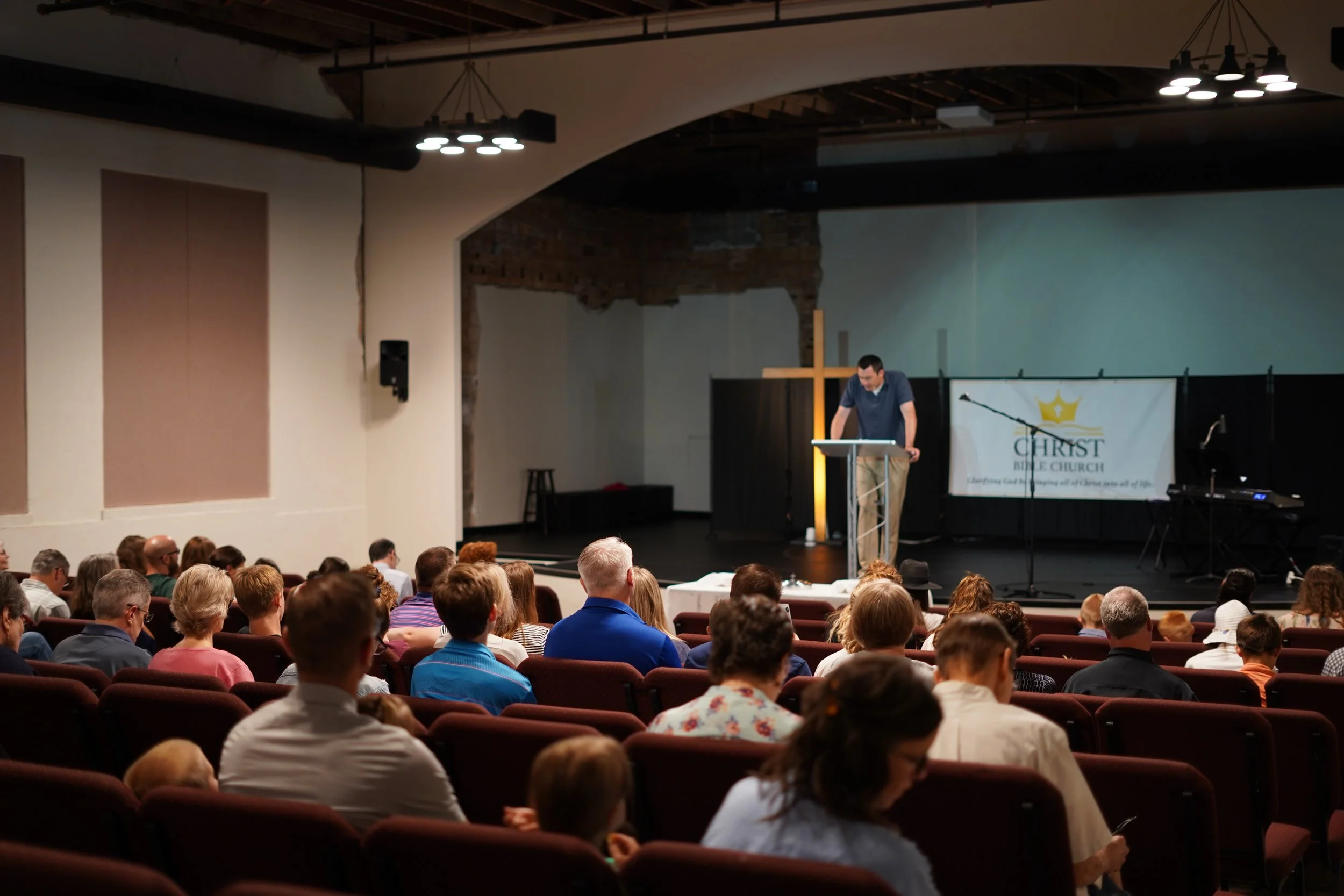
Here are my top five favorite messages from Christ Bible Church in 2025![1] (See here for 2024.)
The Lion and the Lamb (Rev. 5:1–14) by Levi Secord
Why: This sermon does exactly what Revelation is meant to do. It stops trying to put God in the dock and instead puts evil on trial before the throne. Levi lets Revelation 5 set the agenda rather than turning the sermon into a detached philosophy lecture. As he says, “The Bible is far more interested in defeating evil than in explaining it.” He then drives straight to Christ as the answer the text itself gives. The sermon moves from rigorous biblical theology to real comfort for suffering believers without flattening either one, and it’s one of the best sermons I’ve heard that tackles the problem of evil.The Process of Our Salvation (1 Peter 2:1–3) by Ed Glenny
Why: Dr. Ed Glenny was the guest preacher while Levi was on sabbatical writing his book, Servant Not Savior. Ed preached through the doctrine of salvation in 1 Peter, and this easily lands in my top five sermons of the year.
I loved how Ed refused to shrink salvation down to a one-time decision and instead let Peter speak with his full, eschatological voice. He kept God’s sovereignty front and center while still insisting that faith actually does something. It walks, obeys, suffers, and publicly confesses Christ, especially in baptism. At one point Ed pressed this home by saying that baptism is “not a removal of dirt from the body,” but “a pledge from a good conscience that we are going to follow Jesus,” a public act of faith rather than something automatic or magical. And on a pastoral level, there were people in our church who had been wrestling with whether to be baptized, and I believe God used this sermon to press them toward obedience.
(Fun fact: Ed was the person through whom I first heard about Christ Bible Church when we were in the same small group at The North Church during my time in seminary!)Salvation Belongs to the Lord (Jonah 2:1–10) by Levi Secord
Why: I love this sermon because Levi is clear that obedience is not legalism. At its core, the Christian faith really is simple: trust God and obey him. Obedience doesn’t save us, but it is the natural fruit of genuine faith, not something Christians need to downplay or apologize for. Preaching from Jonah 2, Levi shows what faith looks like when everything has collapsed and where we ought to turn when we hit our own rock-bottom moments. When Levi brings in his own past and shares honestly about hitting rock bottom, it gives the sermon real weight, humility, and pastoral credibility.
I’ve met many people who are convinced they need some kind of decisive, dramatic moment (often described as a “spiritual high”, a “mountaintop experience,” or a “special God encounter”) where God suddenly transforms everything and the Christian life becomes perpetually victorious. While God does give memorable moments of growth, most of the Christian life is shaped through ordinary means of grace. It isn’t dramatic or glamorous. Rather, it’s the steady, daily practice of wonderfully mundane trust in God and bending the knee to the King.
Therefore, don’t wait until you have everything figured out before you obey. Rather, obey. And in the obedience, you begin to see. You discover that God meets you on the path. Or as someone once put it, “Obedience is the opener of eyes.”The Resurrection in an Age of Despair (1 Cor. 15:12–20, 54–58) by Levi Secord
Why: What difference does the resurrection make? Everything. In Levi’s Easter message, he pushes back against Christian nihilism, which he defines as the idea that God only cares about the spiritual and that what we do in this world doesn’t really matter. Against that, he shows how the bodily resurrection of Christ gives real, lasting meaning to all of life. He then presses 1 Corinthians 15 all the way down into work, suffering, parenting, and perseverance, and in doing so makes the empty tomb feel not just true, but necessary!Those Who Stand in the Lamb (Rev. 7:1–17) by Levi Secord
Why: Levi rightly keeps Revelation 7 God-centered rather than man-centered and shows that the point of the vision is not the praise of the crowd but the glory of the Lamb who saves and seals his people! I also love how he refuses to call partiality righteous, no matter which side is doing it.
Honorable Mentions
The Wedding of the Lamb (Rev. 19:6–10) by Levi Secord
Why: I love the application of this sermon: stop waiting for the other person to change and obey God now. Husbands, love your wives. Wives, respect your husbands. Husbands and wives, keep your vows, and trust that joy follows faithfulness.The Priest-King (Zech. 6:9–15) by Levi Secord
Why: Two things I love about this sermon: (1) Levi exposes the myth of religious neutrality by showing that every society is irreducibly religious, and that rejecting the true God inevitably turns the state or some other ideology into a functional god. (2) And Levi rejects therapeutic Christianity by proclaiming Christ as the priest-king who actually deals with guilt and shame through real atonement, restores true worship and rightful rule, and establishes a kingdom that cannot fail.
Pastor Tuezong Xiong
Christ Bible Church
[1] Adapted from a post originally published on the author’s personal blog.