Two Kingdoms Folly: Dealing with the Problem of VanDrunen
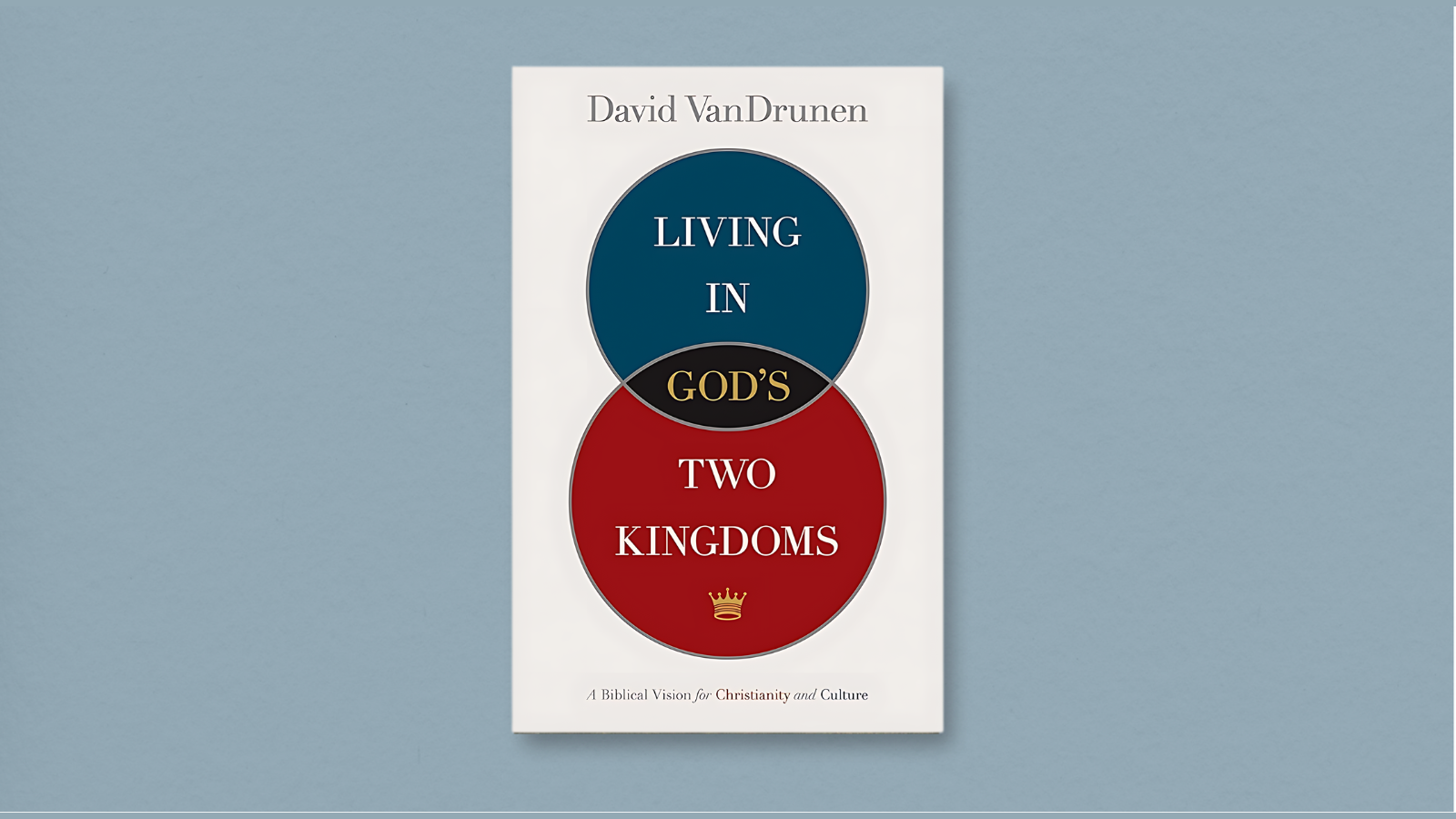
I’ve started to read David VanDrunen’s influential book, Living in God’s Two Kingdoms: A Biblical Vision for Christianity and Culture.[1] In this work, VanDrunen argues for a version of two kingdom theology that is often called radical two kingdoms (R2K) as it has some important distinctions from the traditional, Reformed two kingdoms view. The traditional view was held by individuals like Calvin, Luther, etc. Calvin saw far more integration of Christianity, the church, and Scripture throughout all of life than VanDrunen does.
As I work through the book, it is my hope to write articles engaging with VanDrunen’s arguments. I am not a two kingdoms theologian, but I do hope to represent him fairly. So far, it is clear why VanDrunen’s view is popular. He is an excellent writer, and he makes some brilliant theological observations, especially about Adam’s original role. Yet his theology is incomplete as he selectively applies biblical texts and categories to his theological formation.
In the doctrines of creation and redemption, VanDrunen makes subtle changes that reap drastic results. In this article, I examine his view of creation and his overarching view of the biblical redemptive storyline. First, we must understand how VanDrunen understands the supposed two kingdoms (common and redemptive). Then, second, we can more clearly see his misreading of creation, his incomplete understanding of the cultural/dominion mandate, and his deficient biblical theology.
In short, VanDrunen ends up devaluing the very creation God calls very good; the creation that is now being redeemed by the blood of Christ’s cross.
Understanding VanDrunen’s Two Kingdoms
To his credit, VanDrunen distances himself from the dualistic versions of Christianity rooted in Platonic or Gnostic thought (14–15). Such views overtly deny the goodness, or importance, of the physical creation in exchange for elevating the “spiritual.” He also rejects the heart of secularism, that God is not over the public parts of life (15). Yet, his rejections appear to ring hollow because both secularism and Gnosticism appear as natural implications of his overall theology. How? If one rejects, as VanDrunen does, any continuity between this world and the “world to come,” then God is not in any sense redeeming this world. If true, then this physical world loses all eternal importance. It becomes both meaningless and less important than the spiritual. Despite his protestations to the contrary, VanDrunen’s view reinforces Gnosticism and the upper versus lower story divide Francis Schaeffer warned us about. If God is going to destroy the entirety of creation, then none of it really matters.
VanDrunen argues that God has created two kingdoms that Christians simultaneously live in. First, there is the common kingdom that includes this world and things like work, politics, the family, education, and culture.
Second, there is the redemptive kingdom which only includes the church (e.g., individuals God is redeeming through repentance and faith). According to VanDrunen, God established the common kingdom through his covenant with Noah (Gen. 8:20–9:17) and his redemptive kingdom through Abraham (15). These two kingdoms coexist, but they are sharply divided. VanDrunen asserts that the common kingdom is not being redeemed. He explains:
According to this doctrine, God is not redeeming the cultural activities and institutions of this world, but is preserving them through the covenant he made with all living creatures through Noah in Genesis 8:20–9:17. (15)
VanDrunen, to distinguish himself from his opponents, rules out any redemption of the things of the common kingdom. Such things are destined for de-creation. He writes:
Cultural activity remains important for Christians, but it will come to an abrupt end, along with the present world as a whole [emphasis mine], when Christ returns and cataclysmically ushers in the new heaven and the new earth. (28)
At Christ’s return these institutions and activities will come to a sudden and radical end. (30)
According to VanDrunen, redemption only includes the things outside of the common kingdom. It only includes the church. Does such a view fit Scripture’s teaching? No, not even close.
VanDrunen draws this sharp division because he sees only the newness of the new creation. As cited above, this present world “as a whole” will come to an abrupt end. This world will be wholly replaced with the “world to come” (28). VanDrunen does not see any continuity between this world and the one to come (e.g., the new creation).[2] Creation is not being redeemed, but rather, a new creation will be gained. The new creation is thus wholly new. He explains, “Redemption is not about regaining the original creation but gaining the new creation by the work of Christ alone” (36). In this way, VanDrunen sees little to no connection between the original creation and the new creation. If the entirety of the present world comes to an end, then none of it (beyond Christians) is part of Christ’s redemption.
VanDrunen’s Missteps
The best of VanDrunen’s view is how he pushes back against those who unnecessarily deemphasize the importance of the church, and who see cultural transformation as the primary means of bringing the kingdom. While such outliers exist, and I share VanDrunen’s rejection of them, he makes some devastating theological missteps in his argument. Such errors lead to equally devastating theological beliefs. In the opening of the book, these missteps include a misreading of creation, an incomplete understanding of the cultural/dominion mandate, and a deficient biblical theology.
Misreading Creation
Andrew Sandlin explains the importance of correctly understanding the doctrine of creation: “You can’t get creation wrong and get the rest of the Bible right.”[3] Erring in our beliefs about creation has a massive impact on the rest of our theology. For VanDrunen, he makes subtle changes to various parts of the doctrine of creation and redemption.
VanDrunen argues that if Adam had rejected Satan’s temptation, then the old creation would have been replaced with the “world to come” (41–42). According to VanDrunen, this was God’s original goal for creation, to be replaced with the new creation. Remember, VanDrunen rejects continuity between this world and the new creation (“the world to come”). He explains his view:
The first Adam did not bear God’s image in order to work aimlessly in the original creation but to finish his work in this world and then to enter a new creation and sit down enthroned in a royal rest. (40)
[Adam] could look forward to partaking of the tree of life (Gen. 2:9), which was not the symbol of life on this earth, but of life in a new heavens and new earth. (41)
VanDrunen’s view is that the world God created and called “very good” wasn’t really all that good. If Adam would have rejected the serpent, then that world would have ceased to be and been replaced with the new creation. Even before sin entered the world, according to VanDrunen, it needed replacing. VanDrunen’s view rewrites the entirety of the Bible’s storyline.
God created the world very good, and he charged Adam with spreading and magnifying that goodness. Perhaps the best way to understand this is that Adam was with spreading the glories of Eden to all of creation. But this job is closer to glorifying what is present in creation instead of replacing it. One cannot say creation is fundamentally lacking when God declares it to be “very good” (Gen. 1:31). VanDrunen’s Gnostic-like devaluing of the original creation is plain for all to see, and it contradicts the testimony of Genesis 1–2. God’s good creation is not something he intends to just toss aside on the ash heap of history.
An Incomplete Cultural Mandate
Similarly, VanDrunen misrepresents the cultural mandate of Genesis 1:26–28. What is man’s role? He is correct that man has both inherent royal and priestly duties. We must rule creation, under God’s authority and we are called to live before the face of God. Yet, VanDrunen has a very narrow understanding of the cultural mandate. For example, he fails to incorporate the expansive nature of our royal rule. Man is not just to work and guard the garden, but he is charged with expanding the garden through subduing the rest of creation. Moreover, this includes the call to “fill” creation and to “be fruitful and multiply.” In short, contrary to VanDrunen’s argument, Adam would not fulfill his role by merely rejecting Satan’s temptation (41–42). He had to expand the Garden and fill the earth with godly offspring.
What difference does this make? VanDrunen’s hypothetical order leaves out whole parts of what it means to be a human: subduing, filling, and multiplying. If Adam would have entered the world to come before doing so, then there would be no multiplying or subduing in the original creation. Man would have never fulfilled his purpose. VanDrunen, to his credit, waves at this potential problem (41), but largely he ignores it. In essence, he neuters humanity and the cultural mandate to make it fit into his radical two kingdoms theology.
Yet VanDrunen does recognize the importance of the image of God and exercising dominion. He writes “to exercise dominion is part of the very nature of bearing the image” (39). But so is subduing, filling, and multiplying.
VanDrunen argues that man’s image is being renewed for those in Christ (38). This is a puzzling acknowledgement. This is striking because he rejects renewal language for the redemption of the world, culture, and the common kingdom. Yet he accepts renewal of the image of God in mankind. VanDrunen fails to see how he undermines his own thesis. If the cultural mandate is central to bearing God’s image, and that image is being renewed by Christ, then the cultural mandate is part of Christ’s redemptive work (e.g., kingdom). Since the image of God, including the cultural mandate, is being renewed this means the very things VanDrunen casts aside into the common kingdom are impacted by Christ’s work.
A Deficient Biblical Theology
VanDrunen critiques those who see too much continuity between the old and new creation. Yet in doing so, he completely severs the old from the new. He has no place for speaking of earthly things being redeemed. Seemingly, this creation will come to nothing and be wholly replaced with the new creation. VanDrunen summons texts like 2 Peter 3:1–13 which speaks of this world dissolving and being consumed with fire. He then uses this concept to interpret the new creation as “replacing” the old in texts like Revelation 21:1–2 (51). Such texts are jarring, and certainly move us to some level of discontinuity, but any biblical theology must account for all the relevant texts.
Are there passages which point us toward continuity between the old and the new creations? Yes. For example, Christ teaches us to pray that God’s kingdom would come to this earth (Matt. 6:9–13). Why would Jesus command us to pray this way if this earth will be wholly replaced and if his kingdom has nothing to do with it? The kingdom will come not only come to this earth, but when Christ returns we will hear it declared, “The kingdom of this world has become the kingdom of our Lord and of his Christ, and he shall reign forever and ever” (Rev. 11:15). These verses communicate that there is a level of continuity between this world and the one to come. Redemption includes this creation.
Romans 8:19–23 is devastating to VanDrunen’s thesis. It is worth reading in full. As you read this passage, consider VanDrunen’s beliefs that this creation will fully pass away, redemption only includes the church, and that glorified humans have no further part in fulfilling the cultural mandate. Paul writes:
For the creation waits with eager longing for the revealing of the sons of God. For the creation was subjected to futility, not willingly, but because of him who subjected it, in hope that the creation itself will be set free from its bondage to corruption and obtain the freedom of the glory of the children of God. For we know that the whole creation has been groaning together in the pains of childbirth until now. And not only the creation, but we ourselves, who have the firstfruits of the Spirit, groan inwardly as we wait eagerly for adoption as sons, the redemption of our bodies. (Rom. 8:19–23)
Four points to consider: First, creation itself longs and cries out for redemption—for freedom from its bondage to corruption.
Second, creation’s redemption is tied to our redemption. Paul compares creation’s deliverance to the redemption of our bodies (8:23). In short, there is a similarity between our redemption and salvation of the cosmos.
Third, creation needs redemption, not because it sinned or was flawed, but because we did. Creation, against its will, was subjected to the corruption and futility of the curse. Thus, for creation to be liberated, man’s sin must be dealt with.
Fourth, creation’s redemption comes through the “revealing of the sons of God.” When mankind is restored to his original and glorified purpose, then creation will be free. Contrary to VanDrunen’s argument that humanity has no role in the world’s redemption, Romans 8 speaks of the “sons” (plural) of God as necessary for the liberation of creation. Through Christ’s work, mankind is redeemed and then creation follows as man is restored to his rightful place as an image-bearer destined to rule over creation.
While there is newness to this passage’s description of redemption, it also communicates an irrefutable level of continuity between the old and new creations. Creation itself will be redeemed, and it longs for that day right now. Just as we will be redeemed and glorified, so will creation. These two realities are inseparably connected. Moreover, creation needs liberation not because there is anything lacking in itself, but because it was submitted to futility because of our sin.
Romans 8:19–23 is not alone in making such statements. Recall, VanDrunen insists that, “God is not redeeming the cultural activities and institutions of this world,” (15) and, “Cultural activity remains important for Christians, but it will come to an abrupt end, along with this present world as a whole” (28). According to VanDrunen, this world, and everything in it (besides Christians), will end abruptly and is therefore not being redeemed. Compare this vision with the famous Christological passage of Colossians 1:15–20:
He is the image of the invisible God, the firstborn of all creation. For by him all things were created, in heaven and on earth, visible and invisible, whether thrones or dominions or rulers or authorities—all things were created through him and for him. And he is before all things, and in him all things hold together. And he is the head of the body, the church. He is the beginning, the firstborn from the dead, that in everything he might be preeminent. For in him all the fullness of God was pleased to dwell, and through him to reconcile to himself all things, whether on earth or in heaven, making peace by the blood of his cross.
Christ not only created and upholds all things, but everything exists for him (including culture). Rather than tossing creation on the ash heap of redemptive history, Paul declares a far more wonderful reality—the blood of Christ’s cross is reconciling all things, in heaven and on earth. Paul couldn’t be any clearer: all things seen and unseen, in heaven and on earth, exist for Christ, and Christ shed his own blood to reconcile all these things to himself. It’s all a part of the redemptive kingdom.
Of course, the term all things here is not exhaustive, but it is comprehensive. All types of things are being redeemed by Christ. In the face of such a glorious statement, VanDrunen’s biblical theology is found not only deficient, but anemic, sad, and uninspiring. His sharp division between the old and new creation cannot adequately account for these types of passages. Christ will not forfeit his inheritance just to make secularists and radical two kingdom theologians more comfortable about the culture wars.
Conclusion
In distorting creation and the cultural mandate, VanDrunen ends up with a Gnostic-like view of creation as well as a narrowed and deprived view of redemption. His radical two kingdoms theology contradicts the clear teaching of Scripture. He seeks to divide creation from its Creator and Savior—Christ Jesus. Conversely, Paul asserts that Christ died to “unite all things . . . in heaven and on earth” to himself (Eph. 1:10). VanDrunen pushes us toward a divided view of creation and redemption, all the while the blood of the cross is reconciling and uniting all things under the glorious preeminence of Christ. For this reason, his view cannot withstand close, biblical scrutiny, and it must be thoroughly rejected.
[1] David VanDrunen, Living in God’s Two Kingdoms: A Biblical Vision for Christianity and Culture (Wheaton, IL: Crossway, 2010).
[2] Ibid., 65–66. At one point, when discussing Romans 8:18–25, VanDrunen reluctantly acknowledges that there may be some continuity between the present world and the one to come. The text forces him to do so, but he merely gestures toward such realities. VanDrunen fails to incorporate this vital truth into his theology and thus produces a very unbalanced and unbiblical view of the new creation. He goes on to insist that this creation will be “terminated” (81).
[3] P. Andrew Sandlin, A Creational Worldview: An Introduction (Coulterville, CA: Center for Cultural Leadership, 2020), 17.